
Schedule a Consultation
Take the final steps on your road to recovery.
Contact Us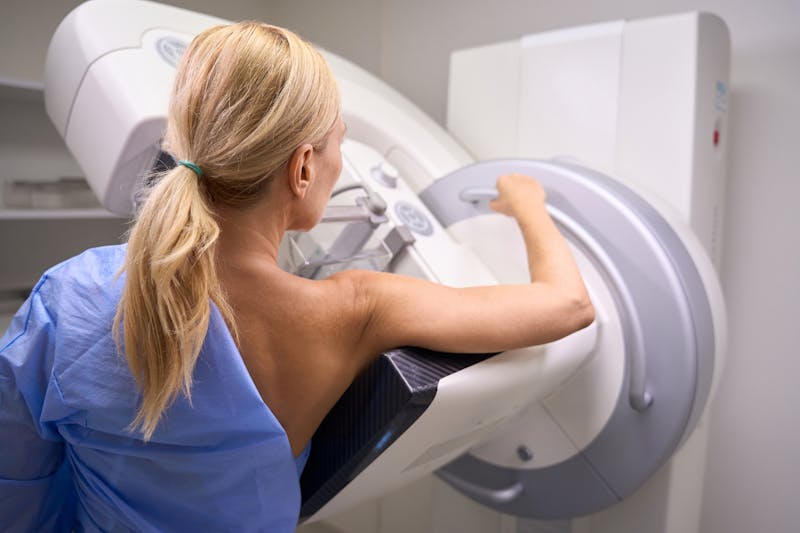
Recently, Dr. Jennifer Simmons made a controversial statement regarding mammograms, claiming that they "do not save lives" and might even "cost lives." As a double-boarded plastic surgeon and someone who works closely with patients at risk for or diagnosed with breast cancer, Dr. Dhivya Srinivasa was quick to respond, clarifying the importance of mammograms and dispelling the dangerous misinformation Dr. Simmons presented.
Let’s break down the key points from Dr. Srinivasa’s response and address why mammograms remain a critical tool in saving lives.
Dr. Srinivasa, who has treated hundreds of women with breast cancer or those genetically predisposed to the disease, directly challenges Dr. Simmons’ claim that mammograms do not save lives. Dr. Srinivasa shared that, in her experience alone, she can name 150 women in the past year whose lives were saved thanks to mammograms that identified breast cancer early, allowing them to undergo the necessary treatments before it progressed to a fatal stage.
In fact, mammograms are one of the most effective methods for detecting breast cancer at its earliest, most treatable stages. Early detection has been shown time and again to dramatically increase survival rates, as it allows for timely intervention. Dr. Srinivasa’s own firsthand experience with women saved by mammograms directly contradicts the claim that screening does not save lives.
Dr. Simmons argues that some diagnoses made through mammograms, like DCIS (ductal carcinoma in situ) and LCIS (lobular carcinoma in situ), may never progress to invasive cancer. While it’s true that some women diagnosed with DCIS may never develop invasive cancer, the risk is real, and not diagnosing these conditions could lead to undetected cancer that could progress into something life-threatening.
Dr. Srinivasa explains that while DCIS might not always progress, some cases do evolve into invasive cancer over time, making it a gamble to ignore potential risks. Early detection through mammograms helps prevent this gamble by offering doctors and patients the opportunity to intervene early when treatment options are most effective. Waiting to treat a potential cancer could be the difference between life and death—an unacceptable risk for any woman.
Dr. Simmons also attempts to undermine the effectiveness of mammograms by citing a statistic that, according to her, only one life is saved for every 2,000 women screened over 10 years. Dr. Srinivasa challenges this figure, stating that she can personally name 150 women from just last year who were saved by mammograms.
This brings us to the Number Needed to Treat (NNT)—a concept taught in medical school. The NNT tells us how many people we need to treat to prevent one adverse outcome, such as death. Dr. Srinivasa emphasizes that the cost of saving one life is incredibly small when you look at the overall benefit of early detection, which outweighs the occasional overdiagnosis or the diagnosis of DCIS that may not have progressed to cancer.
One of the most concerning parts of Dr. Simmons' argument is her statement that “the only thing early detection has done is create more customers.” Dr. Srinivasa points out that Dr. Simmons, who owns an imaging center, may have a financial incentive to promote alternatives to mammography, which could explain her biased and misleading comments.
Mammograms are backed by decades of clinical research, with evidence supporting their role in reducing mortality from breast cancer. The notion that early detection creates customers, rather than saves lives, is not only false but also dangerous. Women deserve accurate, science-based information about their health, not marketing tactics disguised as medical advice.
In the face of misleading and dangerous claims, it’s essential for women to understand that mammograms are a life-saving tool. They allow for early detection, which leads to earlier, more successful treatment. Dr. Srinivasa's response serves as a reminder that breast cancer is not a gamble, and early detection via mammograms is a critical part of the fight against the disease.
Don’t let misinformation sway your healthcare decisions. If you are over 40, make sure to get your annual mammogram. Early detection could save your life.