

Schedule a Consultation
Take the final steps on your road to recovery.
Contact Us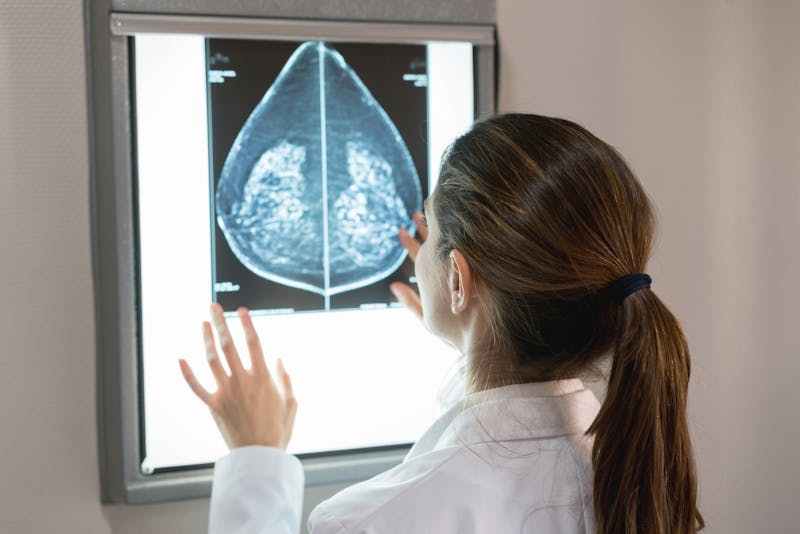
For many women, mammography is an essential part of routine breast health screening. However, in women with dense breast tissue, mammograms alone may not always provide a complete assessment. Dense tissue can obscure abnormalities, increasing the possibility that cancer may go undetected without supplemental imaging.
At The Institute for Advanced Breast Reconstruction, we emphasize education, collaboration, and individualized care. By helping patients understand how breast density affects screening, we support informed decisions about long term breast health.
Dense breast tissue is common and normal. It refers to a higher proportion of fibrous and glandular tissue compared with fatty tissue in the breast. On a mammogram, dense tissue appears white, which is the same color as many breast cancers. This overlap can make detection more difficult.
Women with dense breasts may:
Breast density cannot be determined by physical exam and is identified through imaging, most often reported after a mammogram.
Mammography remains a critical screening tool, but its sensitivity is reduced in dense breast tissue. When both normal dense tissue and potential abnormalities appear white, subtle findings may be missed.
For this reason, a more personalized screening approach is often recommended. Supplemental imaging can provide additional detail and improve diagnostic confidence.
Breast MRI is a highly sensitive imaging modality that uses magnetic fields and contrast enhancement to create detailed images of breast tissue. It can detect cancers that may not be visible on mammography, particularly in women with dense breasts or elevated risk. MRI is often used alongside mammography when clinically appropriate.
Whole breast ultrasound is another valuable supplemental screening tool for women with dense breast tissue. Because ultrasound does not rely on X ray imaging, it can help identify masses that may be hidden within dense tissue on a mammogram. It is commonly used when MRI is not indicated or as an adjunct to mammography for further evaluation.
Additional imaging such as breast MRI or whole breast ultrasound may be recommended for women who:
Imaging recommendations are determined by breast imaging specialists based on individual risk factors and clinical findings.
Dense breast tissue does not indicate disease, but it does require a more tailored approach to screening. Understanding the benefits and limitations of available imaging options allows patients to take an active role in their care.
While Dr. Dhivya R. Srinivasa does not perform breast imaging, advanced breast imaging are invaluable tools in the evaluation of dense breast tissue. Her expertise as a breast reconstructive surgeon who works closely with breast radiologists and oncologic surgeons supports the multidisciplinary care of patients with breast disease.
At The Institute for Advanced Breast Reconstruction, Dr. Srinivasa brings extensive surgical experience and a deep commitment to individualized care. Through close collaboration with imaging and oncology teams, she helps patients understand how imaging findings may influence surgical planning and long term outcomes for their breast reconstruction. Our team is dedicated to providing thoughtful guidance, clear education, and compassionate support at every stage of the breast health journey.